Showing posts with label ceramic workshop. Show all posts

Wednesday, 15 July 2020

tulip vase

As I realised my time at the ceramics workshops at Signal Arts Centre was coming to an end (I have many other projects that are now taking priority attention, although I foresee returning to ceramics sometime in the future), there was still the matter of the disastrous vase I glaze-painted three years ago. I described full details of this spectacular failure here. However, the vase was sanded and scoured and sitting in a corner periodically beckoning to me. Luckily I actually did return to it in February and worked on re-glazepainting before lockdown.


I still wanted to glaze the vase using the original tulip design, and I still have that design as I had been using it as reference for the tulip patterns on my terracotta dinnerware set (I blogged about the bowls here, and that post contains all the links to other parts of the set). I simply applied graphite to the reverse side of the design and traced the floral outlines,


transferring the pattern to the vase.


Then I began, colour by colour, to paint in the design with glaze.
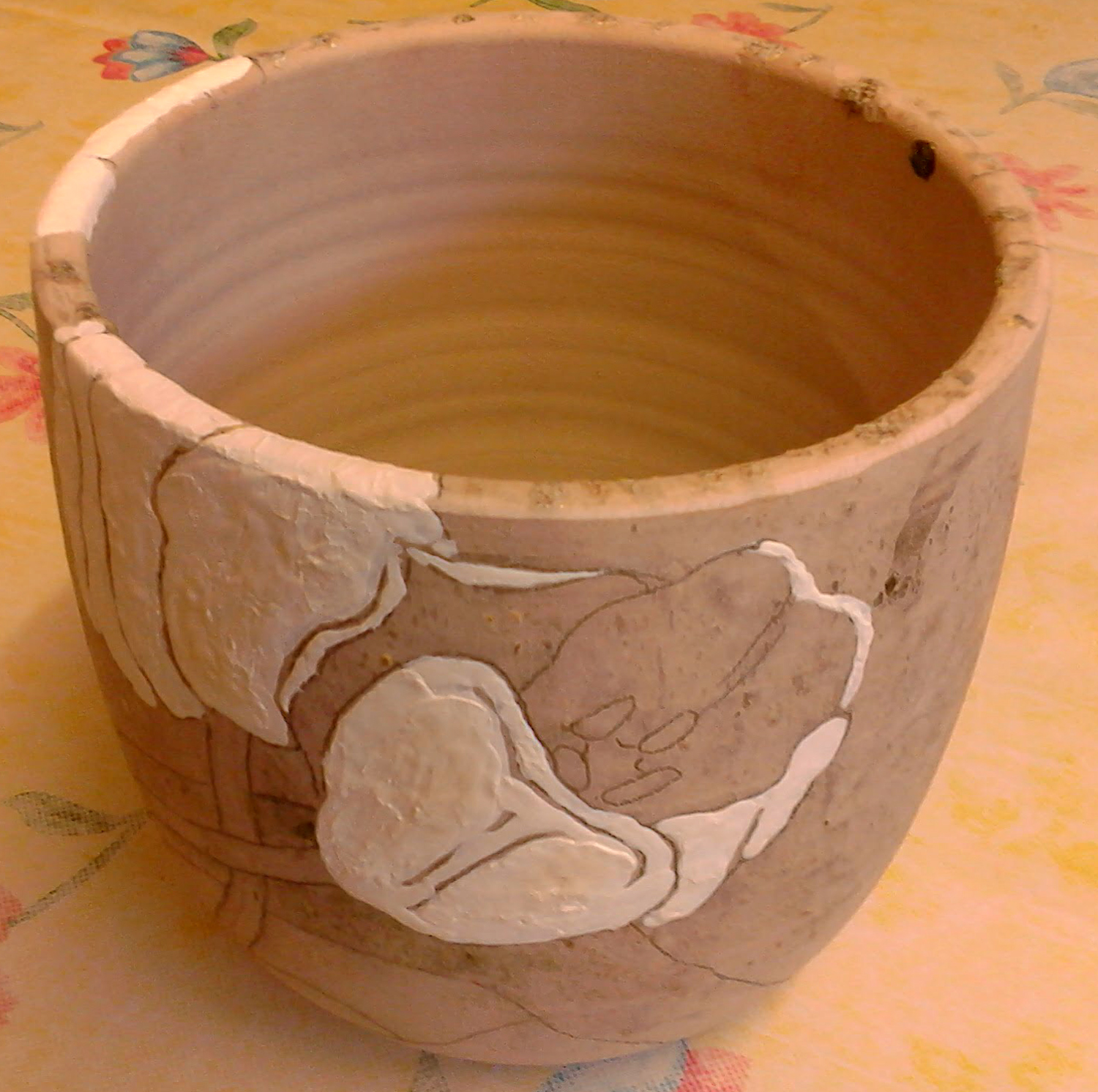

As can be seen here, it wasn't possible to remove all the debris from the initial disaster, so I resolved to simply take the chance on re-glazing and see if these blemishes added an interesting effect to the final vase.


The underlying vase is a pale colour but I decided NOT to glaze paint any outlines on the design this time round. Though the lines between colours appear quite strong in this picture, I expected that it would be more subtle in the firing.


After the disaster of three years ago, I liked the look of the melted blue glass so did not have it removed with the other detritus. I hoped the second attempt at firing the vase would not be unkind to this effect.


I was pleased with the final results.


Signs of the first firing are random and not particularly intrusive (for instance the interior spot visible on the right side in this picture) .


Another view of the fired vase.


This view shows that the stained glass was happy enough with the second firing, showing off it's mix of several colours of blue.


Wednesday, 8 July 2020

draped slab dish - crackle white

Last week I blogged about the draped slab dish I had made and decided to glaze with a glaze I hadn't used before "crackle white". That blog can be seen here. When the dish came out of the kiln, it simply looked like it was glazed with solid white glaze (the underside had a clear glaze, so the terracotta clay showed through, as it does on the edges as can be seen in this photo).


To complete the crackle effect, some India ink and a paintbrush are necessary.


The ink is painted on the plate.


Make sure the whole plate is covered,


Using a damp cloth, wipe the plate


but if any spots are missed, the process can just be repeated.


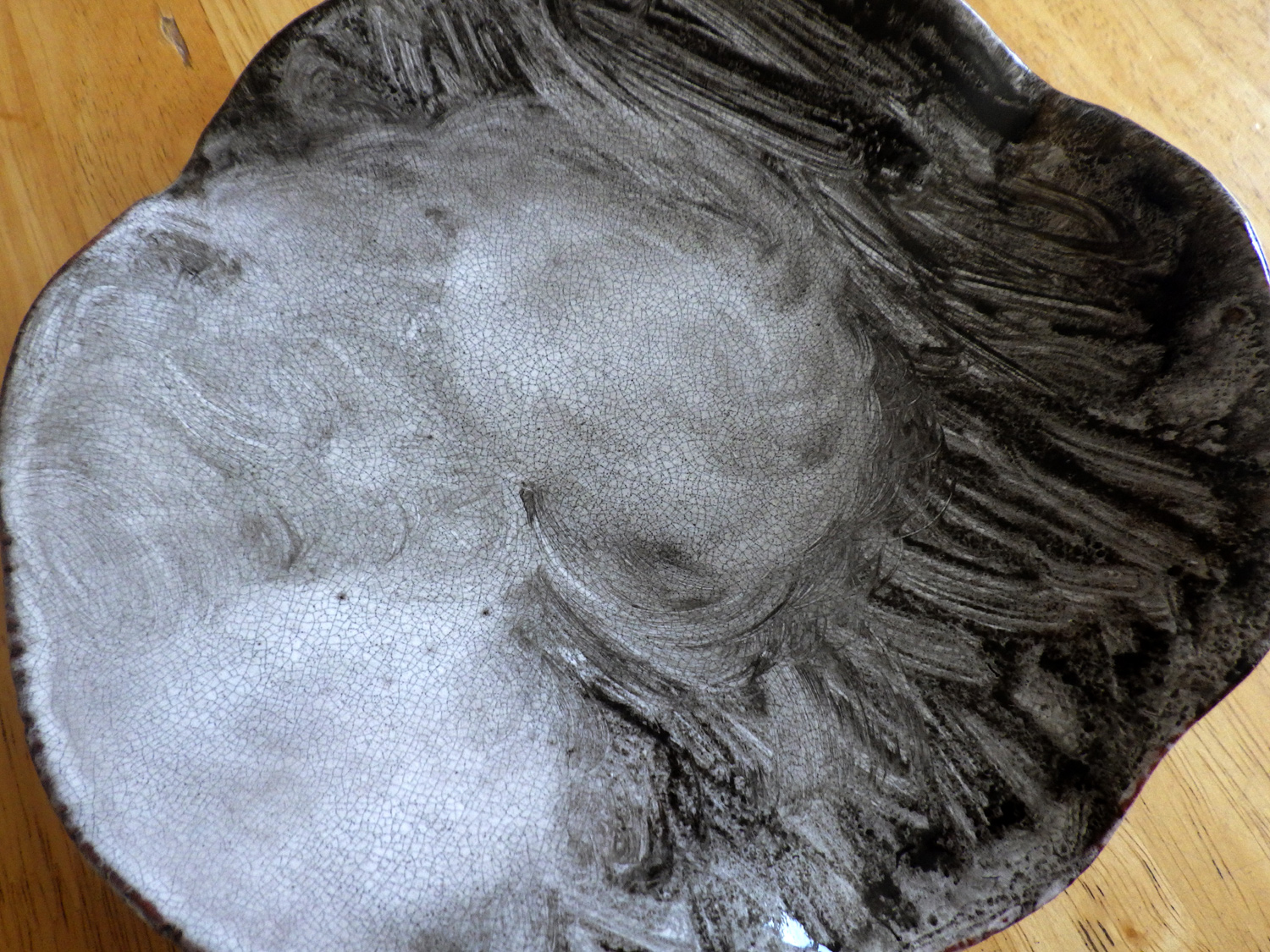
The finished plate has a lovely crackle effect on the white glaze.


Here is a detail of the crackle white on this dish!


Wednesday, 1 July 2020

draped slab dish - glazing

Of course it was all so long ago that I was at the ceramics workshop. Everything went into lockdown in March and while workshops haven't yet resumed, the facilitator returned, with other staff, to prepare the building for a return to activities in the coming weeks. This enabled loading the kiln a few times to fire pots that had been languishing on shelves for the past three months, including some of mine! 

For these terracotta draped slab dishes, I decided I would glaze the undersides with a clear glaze so that handling the finished dishes would not be a rough sensation.


I hadn't tried the crackle white glaze before but decided it was high time that I did! This glaze is a two-parter: the pot is glazed solidly with the one colour and then after firing India ink is rubbed in to produce the crackle effect.


It is not apparent, when the dishes are fired, that there is anything special about the glaze - it will just look white. This is the view from the kiln of one of the dishes.


The clear glaze on the underside makes for a smooth finish. Next week I will show what happens with the India ink and the crackle white glaze.


Wednesday, 12 February 2020

Shamrock bowls - revamped!

In 2018 I made two foliage bowls, which I was really happy with from a beautiful results point of view, but realised that I put such a huge amount of effort into their making that I wanted them to remain unique, for my own use only. Last autumn I wondered if there was a way for me to create several similar bowls that I would be happy to sell at a reasonable price. I decided that I would make the bowls using one plant and that I would make them without "feet" thereby removing the necessity to take them home in order to complete. Details of making the fern and wild rose leaf foliage bowls are here and images of those finished bowls are here. I had a pot of shamrock in bloom, so I brought it into the ceramics workshop and cut sprigs from it for my design.


I was using plastic pudding bowls (I had 3 different sizes) as formers. Each bowl need a cling-film lining and then I swirled long sprigs of shamrock inside the bowls.


The clay was wedged and rolled out into a a large slab, from which I cut random pieces, which were fitted together as I worked.


I used my fingers to press the pieces together, letting the finger dents remain as part of the interior bowl form.


From the outside, one can see how the shamrock has been embedded into the clay from the pressure of joining the pieces. The cling-film creases will also add to the final design, apparent in the glazing process.


Here are the five bowls posing with the shamrock. Normally they need to be leather-hard dry before removal from the bowls, but since I was not adding feet to the bowls I could leave them until they were totally dry and ready for firing.


I glazed all the shamrock bowls with a food-safe green, wiping the glaze on the exterior in order to allow the glaze to only be in the plant and crease areas. I liked the way the glaze worked on the interior, accentuating the finger marks, however, I thought it was a bit too pale on the outside. I did submit them to the craft fair (more pictures can be seen here) but when they returned to me, I took the opportunity to make them better bowls.


For each of the five bowls I made feet that I thought were an aesthetic improvement. I knew that once they were fired some glaze could be used as a glue and the bowls could be re-fired with their feet.


I also took the opportunity to use a darker glaze on the exterior, with not such aggressive wiping in order that the creases were more apparent as well as a stronger appearance of the shamrock. For the deeper bowls I made tall feet.


For the two shorter bowls I made feet rings that were appropriately shallow. I am quite pleased with the results.


Wednesday, 29 January 2020

Draped slab ceramic serving dishes

In the late autumn last year I started making some draped slab serving dishes. My intention was to make them quickly and sell them at the xmas craft in December. Of course, things always take a bit longer than I expect, but they worked out fine. I had two formers, one of wood and the other of plaster, bowl-shaped and I overturned them in order to simply drape a slab over them, with a cling-film layer between the clay and the former.


I've been doing a new style of foot lately, in two pieces - two arcs making dishes "float" above a table surface.


I never took photos of how I attached the feet to the 2019 dishes, but I did for recent ones (note the date). After deciding where the clay arcs would be placed and tracing their outlines, the areas would be scored and slipped.


The feet are also scored and slipped, and after affixing to the dish, I lightly paddle them down (with a wooden paddle) in order to ensure that there is no air between the dish and the foot. This is usually apparent when some slip oozes from the joint.


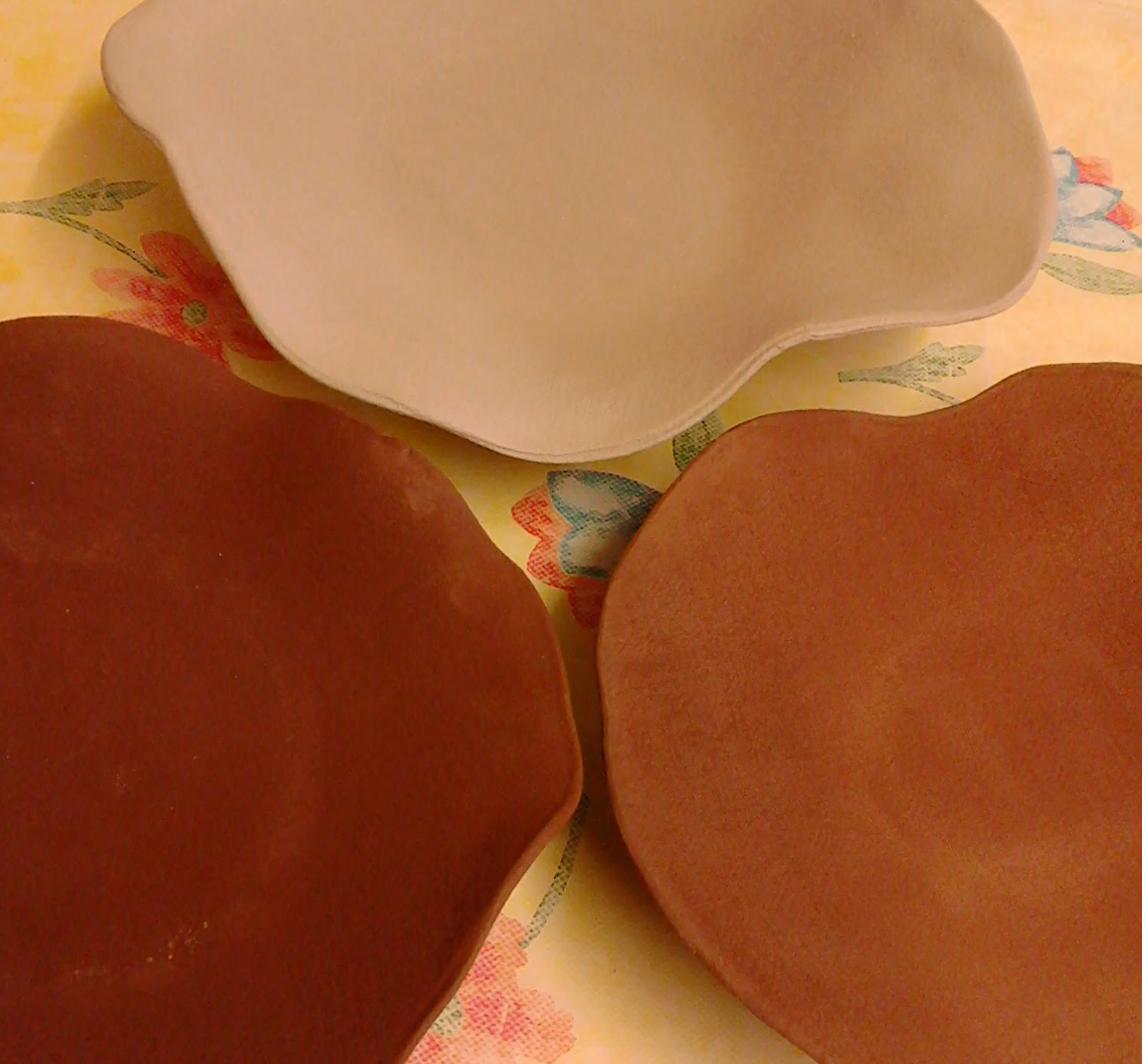
Dried and ready for the first firing, here are two terracotta and one white buff draped slab serving dishes.


After bisque firing the pots are ready to glaze. I decided to glaze the underside of the dishes so the texture when handling wouldn't feel abrasive.


Though this may look like only one glaze, there are actually three different glazes on the terracotta dishes: a base layer of cobalt blue with splashes of two runny glazes (aquamarine and sea green).


I had already witnessed these colours interacting in a lovely way, and was not disappointed.


Both dishes were bought within two days of being for sale, so again I was pleased.


While I made a draped slab dish from white buffclay, I later made two smaller dishes from grey buff. I decided, since I was including them in the xmas fair that I would glaze paint a holly design on them.


I forgot to take pictures of the finished grey dishes before they sold, but they had a white glaze underneath the holly. The white buff dish simply has a clear glaze underneath the holly design. This dish is larger than the grey ones and I'll see it again on my Christmas table setting!


Sunday, 20 October 2019

raku event!

In preparation for this year's October raku event I created two simple pinch pots and left large areas on both pots unglazed with the "smoker" in mind. I have found, at other raku events, that bright colours produced a pleasing outcome, so I decided to glaze my little pots with the apple green.


The raku day really is an event: interested participants are from four different workshops and come together for a day of fun, chat, and food as we have a pot luck lunch which we casually nibble on once the pots are in the raku kiln. There were two firings planned, so there was lots of time for great company and conversation among the participants.


Once the firing was complete, workshop facilitator James Hayes turned off the gas, opened the kiln lid and pulled individual pots out of the kiln


and transferred them to the smoker. At previous raku events people experimented with patterning techniques, such as applying hair and/or feathers, spritzing with water and/or sprinkling sugar on their pots, but at this event mostly everyone just wanted pots to go directly to the "smoker" (a lidded bin full of sawdust) for carbonising.


One of the participants was especially brave taking responsibility for quickly removing and replacing the "smoker" lid (NB all safety measures were adhered to, it just looks daunting!).


After about 20 mins in the "smoker" the pots were removed and individually dunked in a bucket of cold water.


The pots could not be just left in the water or there could be a risk of a hole being burned into the bucket or the water getting too hot to cool following pots. The yard is pebbled so the pots could be placed on the ground to continue their cooling.


Everyone was quite pleased with how things went on the day. These are the pots from the first firing.